-
Online Wisdom School
Home
Watch/ListenDeeper Learning

Special Lessons
-
 Special Lesson
The Grand Cycle of Reciprocity
- Posted: 09/29/25
- 748 words
- 26 Views
- Comments (0)
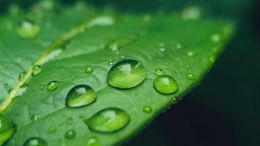
Once something has outlived its usefulness, its purpose for being in existence is no longer needed. The leaf that captures a stream of sunlight and then transfers its energy to the tree serves one purpose in the spring and summer and another completely different purpose through the fall and winter. Its form first appears as an agent to help feed the tree and then, as it dies and falls to the earth, the same leaf becomes food for the tree.
-
Special Lesson
The New Life We Long For
- Posted: 09/23/25
- 495 words
- 17 Views
- Comments (0)
The truth that sets us free is not for hire; it does not so much "work" for us as it is our silent partner, producing the new life we long for. This means that first, we must be receptive to truth's instruction in the Now; only conscious awareness of our aching can lead us to what authentically answers it, ending it. But secondly, we must -- ourselves -- be true in the same moment to what we know is the truth of that moment.
-
Special Lesson
Everything in the Universe is Created to Change
- Posted: 09/07/25
- 517 words
- 17 Views
- Comments (0)
Whatever we try to go around in ourselves guarantees it will come around again, which is why the things we fear in life and about ourselves always tend to reappear. Here's the law that governs this relationship: whatever we resist in life persists as it does because whatever we oppose grows!
-
Special Lesson
In the Heart of the Opposites is an Ascending Spirit
- Posted: 08/25/25
- 777 words
- 34 Views
- Comments (0)
Rushing somewhere, through anything, in the hope of finding some imagined peace of mind is like looking for your heart in someone else's body!
-
Special Lesson
We're On This Earth to Learn
- Posted: 08/18/25
- 493 words
- 35 Views
- Comments (0)
The Divine knows we are ready to see the true solution to our suffering only when - and as - we realize we must no longer make excuses for any moment when, and where we miss the mark.
-
Special Lesson
Who You Really Are Can't Lose Anything
- Posted: 08/11/25
- 925 words
- 38 Views
- Comments (0)
Seldom do we know a greater need for making a fresh start than in those mind-numbing moments when we find ourselves feeling thrown for a loss. These feelings of loss often leave an unconscious, invisible residue of fear which tends to taint every area of our lives with distasteful timidity, born of the neurotic suspicion that in some way, life is conspiring to take something away from us.
-
Special Lesson
Every Moment Is The Right Moment To See Ourselves As We Are
- Posted: 06/09/25
- 677 words
- 40 Views
- Comments (0)
As we're about to discover, the little phrase, "I see myself," describes a single action that has the power to change the heart of whoever is willing to embrace its practice. But, before we examine the exercise, let's take a closer look at what it means to "see ourselves" -- as we are -- especially when someone else has failed to please us.
-
Special Lesson
Catch the Weights of False Responsibilities
- Posted: 04/14/25
- 853 words
- 22 Views
- Comments (0)
It is no stretch of the imagination to say that many days most people wrestle with some form of discontentment about their lot in life. Add to this an equal if not greater amount of time spent searching for the solution they think will "cure" this confliction, and it might surprise us how pervasive runs this human pastime of trying to dodge these feelings of being discontent...
-
Special Lesson
Awareness of the Whole of Yourself Changes the Whole of Yourself
- Posted: 04/07/25
- 604 words
- 32 Views
- Comments (0)
No gulf exists between your life and God's life, except for your awareness of yourself. No time, no space exists between you and God's life -- only the level of awareness from which you live determines whether you understand this unity or not. That means the task is not to try to change things in time and space, but to bring yourself back into the moment where the possibility of this relationship already exists, and where your realization of it...
-
Special Lesson
Leave the Impression Alone
- Posted: 03/31/25
- 730 words
- 24 Views
- Comments (0)
Why do we limit the impression we have of any given moment? We never limit an impression when we're sitting in front of a nice plate of food. Can't get enough of that! We never limit the impression of the idea of some beautiful place to go where we're going to have a marvelous time. There's no limitation to the impression produced by imagination. We want it with every bit of our being!
-
Special Lesson
The Freedom We Seek Is Found Everywhere And All At Once
- Posted: 03/03/25
- 743 words
- 36 Views
- Comments (0)
When things naturally come to a close in life, our pain isn't so much born of the fact that something now ends, as it is that within this moment of ending, we are forced to meet a certain order of emptiness in us for which we are just not prepared. We are brought face to face with a great void in the center of our heart that we thought had been filled. And then we make this common, but largely unrealized mistake...
-
Special Lesson
Learn What It Means To Watch
- Posted: 02/10/25
- 663 words
- 28 Views
- Comments (0)
We are created to know ourselves not by what we think about, but to know ourselves within God's ever-present, perfectly changing Life. The challenge for us is that we are habituated to thinking about ourselves and deriving a sensation of ourselves based upon the images that we consider.











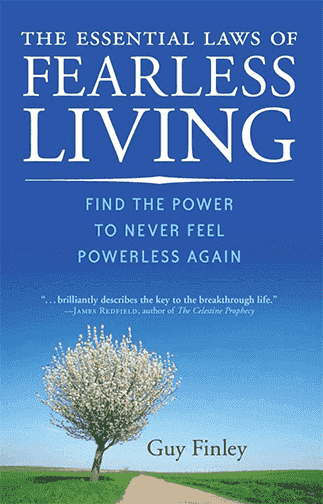
The Essential Laws of Fearless Living
Here is your step-by-step guide to building the foundation of a fearless life. Learn how to see through the illusion of limitation and become unstoppable.