Reactions
-
 Special Lesson
No Situation Is Too Great For Who We Are!
- Posted: 02/16/26
- 533 words
- 50 Views
- Comments (0)
Key to sailing through any crisis is learning to deal first with the fact of fear, instead of what fear says is the fact. What am I looking at when I'm dealing with what fear says is the fact? An event has taken place and fear says, "Oh my God, look at this!" But the event is gone, so what am I looking at? Am I looking at the fact? No.
-
Special Lesson
Choose a New Course of Action
- Posted: 12/29/25
- 1097 words
- 18 Views
- Comments (0)
Any real intention we set for ourselves to rise above our present level of being is going to reveal a lower level of self that doesn't want to change. This is a powerful spiritual law that creates both challenge and opportunity at the same time. The challenge: agreeing to see how our unconscious nature -- encased and enchanted by its own negative reactions -- is incapable of doing anything other than resisting unwanted moments.
-
Special Lesson
Real Life Is In Perfect Order
- Posted: 05/06/25
- 1603 words
- 37 Views
- Comments (1)
The fact that we always want something from the moment -- even if it's to not want what it offers or has otherwise come to reveal -- blinds us to the fact that every moment is always giving us... showering us... with the Light of a Life that wants for nothing.
-
Multi
Format
Short TalkWho Is In Charge When I Get Angry and Upset?
- Posted: 02/24/25
- Meeting: 02/02/25
- Time: 00:02:29
- 30 Views
- Comments (0)
Who is in charge when anger takes over? Guy explains that we often don't realize something else is controlling us in moments of stress or resentment, and invites us to, instead of reacting, pause and ask, "Who is in charge?" Stay with the question without rushing to answer. This awareness creates a crucial separation between our True Self and our reactive nature. Remembering this in the moment can lead to real inner freedom.
-
Special Lesson
Identifying With a Negative Reaction is Not Inevitable
- Posted: 04/23/24
- 1204 words
- 12 Views
- Comments (0)
We have in us -- built over time as part of the construct of our personality - a literal host of demands. Things that over time have been thought over and over and over again until the construction of those thoughts becomes an unconscious attitude. For instance, if you think enough times, "Why are they doing this? I shouldn't be treated like this!" Gradually, you walk around with a chip on your shoulder, but you don't know it's a chip on your shoulder...
-
Special Lesson
You're Bigger Than Any Moment You Fear
- Posted: 06/13/23
- 922 words
- 8 Views
- Comments (0)
We act every moment in our life from one thing and one thing only: that which (in us) is the knower of that moment. We act from what we know. As we are now, our actions -- based on what we know -- are predicated on a certain knowledge that appears with the reaction that tells us the meaning of the moment. And no more do we receive and are told the meaning of the moment...
-
Multi
Format
Short TalkAm I Learning? Or Am I Burning?
- Posted: 04/06/23
- Meeting: 03/05/23
- Time: 00:01:24
- 6 Views
- Comments (0)
In this answer to a viewer's question, "Secret of Letting Go" author Guy Finley explains that in an unwanted moment, we have the choice to be actively aware of the burning reaction, or we can be passive and allow the reaction to dictate our actions. The awareness of the consciousness that has the reaction is the beginning of our freedom from it, and there is no other freedom than that.
-
Special Lesson
Catch the Runaway Reactions that Rule Painful Moments
- Posted: 01/26/23
- 592 words
- 3 Views
- Comments (0)
Have you ever heard within you, not necessarily in words, something to the effect of "Oh no, not this again!"? Perhaps we're looking at the latest flame of our heart and we see a fire in his or her eyes, but it's not because they are looking at us. In that moment we no longer see the moment unfold as it is, but rather we stand there transfixed -- experiencing the moment as we are; and we are not really present!
-
Special Lesson
Catch and Drop the Weight of Punishing Reactions
- Posted: 01/19/23
- 378 words
- 0 View
- Comments (0)
Our present experience of life, its happiness or sorrow, is nothing more or less than what certain unconscious parts of us tell us it is. Before we can hope to change our life experience, we must stop trying to re-write the Book of Life and work instead to awaken ourselves from the dreams of the unseen storyteller within us.
-
Special Lesson
The Unthinkable Leap that Takes You Beyond Yourself
- Posted: 11/17/22
- 735 words
- 2 Views
- Comments (0)
Wouldn't it be a real relief to get outside the limitations of negative reactions? But how do we get there? How can we be certain we're headed in the right direction?" Here is a great secret known only by those who have made the journey before us: Walk away from the mental "how" into the spiritual Now. And here is one of the keys to this special instruction: The journey outside of yourself doesn't...
-
Special Lesson
Welcome the Light of Truth into Your Inner Home
- Posted: 10/20/22
- 564 words
- 2 Views
- Comments (0)
It seems natural to fear moments we don't want, to avoid any knock at the door of some untimely event. But it's not these moments themselves that we are afraid of: what we fear is our reaction to them, so that we can't see that this experience we don't want... is actually the pain of a negative reaction as it unfolds within us.
-
Special Lesson
Let this Conscious Action Take the Place of Getting Upset
- Posted: 05/05/22
- 235 words
- 4 Views
- Comments (0)
When the doctor taps your knee and it suddenly jerks, you don't get upset with your leg for jumping out of control. Why? Because in that moment, you realize your temporary jumpy experience is an involuntary physical reaction. But how do you view your emotional reactions when they start jerking you around? Not only are they hard on you, but once they're done, you're then hard...












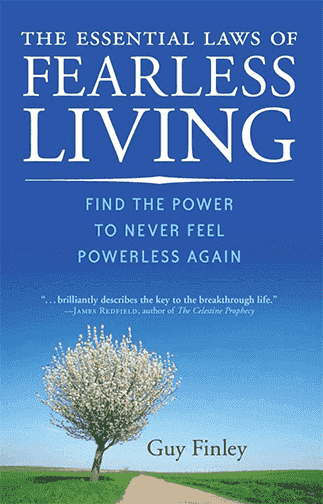
The Essential Laws of Fearless Living
Here is your step-by-step guide to building the foundation of a fearless life. Learn how to see through the illusion of limitation and become unstoppable.