-
 Special Lesson
Live by the Rule of Divine Life
- Posted: 12/29/14
- 692 words
- 1 Views
- Comments (0)
Which would you rather do? Be identified with all the things in life that come and go... so that this lower sense of self compels you to cry and worry and fight to keep everything in place? Or, would you rather be free of that lower nature that lives to cling... so that you're increasingly able to just let what "comes and goes" do just that... come and go with no further muss and fuss? We've...
-
 Special Lesson
How to Stop the Spiritually Sick from Infecting You
- Posted: 06/04/10
- 707 words
- 8 Views
- Comments (0)
Those with whom we assemble we will soon resemble, so the simple old saying goes. Yet it tells of a deep truth. It says that who we are -- the stuff of our soul at present -- is being transformed continuously by the nature of the company we keep; so that, in our essence we are always moving and evolving towards a kind of psychic oneness with whatever relationships we have revolving around us t...
-
 Special Lesson
Leave the "Victim Level" of Life Behind You
- Posted: 02/11/07
- 683 words
- 12 Views
- Comments (0)
When faced with any pain or grief -- past, present, or promised -- the first thing our lower nature, the "me mind," usually asks is: "What's to be done? Who can I speak to about it? What's the best way for me to handle it? Is there any way out?" And at the heart of these complaints, whether detected or not, is the me mind's favorite question: "Why does everything happen...?"
-
 Special Lesson
Step Back from Your Reactions
- Posted: 03/06/18
- 757 words
- 0 View
- Comments (2)
Any condition we meet that is unwanted, such as a rude person, is not the cause of our stress. All conditions simply offer a momentary mirror for us in which it is possible to begin seeing what we have brought with us, within ourselves, into that moment.
-
 Article
Journeying Within: Guy Finley and the Transformative Mission of Life of Learning Foundation
- Posted: 01/23/24
- 1624 words
- 12 Views
- Comments (0)
Taking up a spiritual journey is often a deeply personal quest, yet it becomes extraordinary when shared with a community dedicated to self-discovery. In a recent interview with Guy Finley, founder and director of the Life of Learning Foundation, hosted by MysticMag, the roots of this transformative organization are unveiled. Guy's path to spiritual awakening, marked by encounters with enlightened mentors and a pivotal moment with Vernon Howard...
-
 Special Lesson
Develop the Indomitable Self in You
- Posted: 08/10/04
- 1614 words
- 2 Views
- Comments (0)
In this world that you and I live in, response is request. We can slightly enlarge this idea by restating it this way: The way you respond to life is also a request you make to it. See how the next few examples prove this important discovery: Someone walks into your home or office and says something to you that upsets you terribly. You respond with a negative state, continuing to brood or...
-
 Special Lesson
In the Heart of the Opposites is an Ascending Spirit
- Posted: 08/25/25
- 777 words
- 34 Views
- Comments (0)
Rushing somewhere, through anything, in the hope of finding some imagined peace of mind is like looking for your heart in someone else's body!
-
 Special Lesson
Your True Nature is the Nature of Freedom
- Posted: 07/31/23
- 787 words
- 6 Views
- Comments (4)
How would you like to live from a nature where no matter what happens, no matter what comes at you, as soon as whatever it is lands on you, it's changed into something good? "Oh gosh, wow! You mean I could live from a part of myself where it wouldn't matter what it was that came to it -- no matter how dark, fearsome, hateful, worried, angry, no matter what it was -- as soon as it touched me...
-
 Blog
BlogYour Pain, Planetary Forces, and the Unseen Path to Freedom (Blog)
- Posted: 06/29/20
- 733 words
- 94 Views
- Comments (4)
In a very unique form of arrogance (which is really human alone in its nature and appearance), there is a given attitude, a given perception of life--that one is not only apart from everything that one sees, but that what takes place in one's life is something that the individual (apart from what he or she sees) has some control over and can change at will...
-
 Special Lesson
Awaken to the Forces at Work Within You
- Posted: 08/05/19
- 770 words
- 3 Views
- Comments (1)
The real adversary in our lives, that proverbial thorn in our side that leaves us aching and angry, and then sends us looking for someone to blame, is not what we have always believed. It is not something "out there." It's something "in here": an intimate enemy.
-
 Special Lesson
The Power to Outgrow Problem People in Your Life
- Posted: 10/19/08
- 790 words
- 14 Views
- Comments (0)
When someone acts thoughtlessly towards us, and we react negatively towards him or her, it is a similar thoughtlessness in us that responds. In other words, our own hostile reactions take no thought for anything outside of what they call into account for their suddenly heated existence -- so that the only awareness we possess in these times is that low level of cognizance that possesses us, ma...
-
 Special Lesson
The Secret for Making a New and True Beginning
- Posted: 12/28/03
- 752 words
- 7 Views
- Comments (0)
There can be no starting place in our lives any truer than what our own awareness of the present moment permits. This friendly fact tells us that our life direction, our actual destiny, is determined by the level of our awareness that attends the full range of each step we take. The next two examples prove this insight beyond the calling of any logic. No one consciously takes a step in haste...
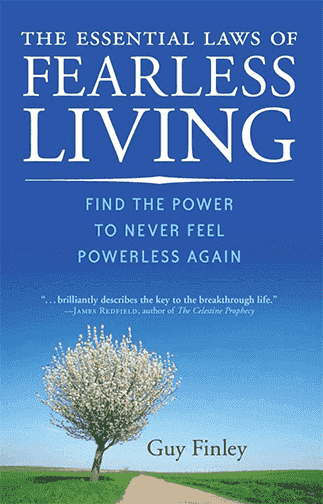
The Essential Laws of Fearless Living
Here is your step-by-step guide to building the foundation of a fearless life. Learn how to see through the illusion of limitation and become unstoppable.