If you haven't noticed this yet about yourself, it's easy to see in others: we each seem to carry the weight of the world on our shoulders. The nature of this burden may change with age. When young, we feel the weight of having to choose a direction in life. As adults, we feel encumbered by all the perceived requirements of an active life: trying to control events, win acceptance, maintain relationships, on and on, with each new self-shaped solution for success only increasing our burden.
Then, as we naturally mature and slow down, we often find ourselves feeling oppressed by the things left undone or mistakes made along the way. In short, regardless of our age, we tend to feel weighted down by what we perceive as our responsibility to create and live a "meaningful" life.
Each of us, to some extent, feels certain that we are obligated to carry this weight. Our idea of shouldering it is to work hard, struggling to appear important in the eyes of others, as well as in our own. It's a wearisome task with few real rewards, and since the only real pressure we're under is self-imposed, the only relief we find is when we get off of our own backs!
Surprisingly, most people recoil at the suggestion that the weight they carry is in their own minds only. "I'm a responsible person," they proclaim. "That's why I suffer. In fact, my suffering is proof of just how responsible I am!"
All of us have heard claims such as this. We may even have spoken these words, or at least felt these sentiments, ourselves. However, not only should we not suffer over whatever we have assumed as our responsibility, but our first real responsibility is to see through all forms of self-created suffering. Let's take a closer look into this contradictory condition within ourselves.
To begin with, we want things to change. This wish is like believing that being anxious about whether the sun rises or not will help it to do so. Life is change. But we also want it to get better, which means to change according to our own notions of success. So, we try to control what happens, believing that the tension this causes between life and our ideas about it is what it means to feel responsible. There is something misplaced in this mixture of life and our longings that grows unseen. The reason we strain as we do to carry this daily load is because we believe it is what's required of us to create a real self.
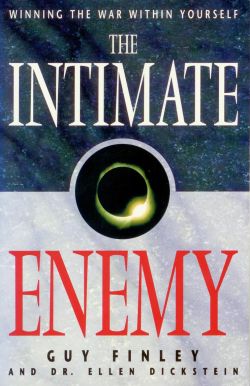
However, for all our struggle, no permanent self appears; only a kind of peculiar suffering manifests itself again and again, giving us an unwanted sense that its permanence may be all there is to life. The only self that finds this sad state of affairs to its liking is "the intimate enemy," because its idea of permanence means having something to struggle with permanently! When we try to change life in response to the prodding of this false self, the results are self-formational.
All self-formational changes are awkward and temporary at best, because they are not rooted in reality. The struggle we undergo to bring them about is not only painful in itself, but causes additional suffering, as when our false sense of responsibility causes us not only to interfere with our own lives, but with those of others around us. Wrongly believing that the way someone else behaves is our responsibility not only makes us suffer, but that person as well when we try to meddle with his or her life. Our growing awareness of our mistake causes us to become disenchanted with the self-formational approach to living, and we begin to seek the transformational life instead.
Wouldn't you like to just let go? To release once and for all your concern for the future? Wouldn't it be wonderful to just drop the burden of feeling responsible for the outcome of every event? Yes. It is possible to live this lightly.
As we recognize the futility of trying to force ourselves and our lives into what we think they should be, we also begin to understand that all of our suffering for what we perceive as "coming up short" in life is self-inflicted.
What we once mistook for being responsible to our future now shows itself to be only an unconscious punishment in the present. Our findings don't mean that we don't take necessary practical actions for our well-being, or that we are not decent to others. It means that we let go of feeling responsible for the future as though we must control its outcome. We realize that there is no way that our painful concern can positively affect any outcome, so we drop that concern. Bit by bit, we begin to hear what real life has been trying to tell us all along.
Now is all there is.
The future is not ours to control. Our responsibility may include choices about what's to be, but it is not to determine or suffer over what becomes of our choice.
Our responsibility is only to remain aware in the moment and to allow ourselves to be guided by and within that awareness. It's when we leave it at that, that our experiences become transformational. When we assume false responsibility for any moment to come, and then feel worried about events because of this self-imposed concern, we remain self-formational. Meeting life in this way, we are not transformed by events as we should be.
When we lash out at ourselves for our actions or are anxious about them, these negative feelings are the result of an invisible assumption about responsibility. Our increased understanding, however, reveals that it is not necessary to live with or carry these pains at all. Our false natures protest, saying that if it were not for this sense of responsibility, we would not be effective. The truth is, we can learn to drop the false burden of pain and still perform all the actions we need to in our daily lives. In fact, we'll be even more effective. There is no necessary relationship between responsibility and suffering. Our belief in the connection is mistaken, based on self-formational logic.
"If I don't suffer over my responsibility," we say, "it would mean that I don't care. But I am a good person, and my suffering proves it." We impose pain on ourselves trying to make ourselves believe that because of it we are worthwhile, and that our self-image is real. It's all a lie. Our suffering does not make us real, but seeing through suffering as the false anchor that it is also reveals a new reality where being responsible -- and real -- are one and the same pleasurable state of Self.
To sum it all up, let's just say that being a truly responsible human being has nothing to do with being an aching human being. The negative emotion, not the task, is the only weight we bear. We mistakenly believe that we can affect what's to be by how willing we are to feel bad over the situation as it is. However, determining the outcome of any event, including our own life, is the task of Truth and Reality. No amount of pained thinking or anxious emotion can affect what will be other than to ensure that it won't be as we wish. This means that our task, in any given moment, is to meet life with awakened awareness so that our understanding of each situation reflects Reality and not our imagined self-interests. Then, the choices emerging from this relationship naturally reflect what is genuinely good for us. Our decisions are increasingly effortless because they are made, literally, in the light of a new understanding.
Everything works out as it should when we are responsible for what we are designed to be responsible for -- which is simply to discover the truth about this life and our place and possibilities within it. When we proceed this way, events unfold perfectly and effortlessly, for something higher carries them for us.
So, whatever it is that wants us to worry -- be it a job interview or a failing relationship -- just let go of that weight within. Let something else carry it. Our belief that we must wrongly carry the weight of our own lives prevents our transformation into a higher and happier level of being. We can learn how to say to Truth, to God, "You handle it. You carry it." Then we do what seems appropriate, taking the best care we can, and let what happens naturally take care of itself.